


History of Gaz in Isfahan
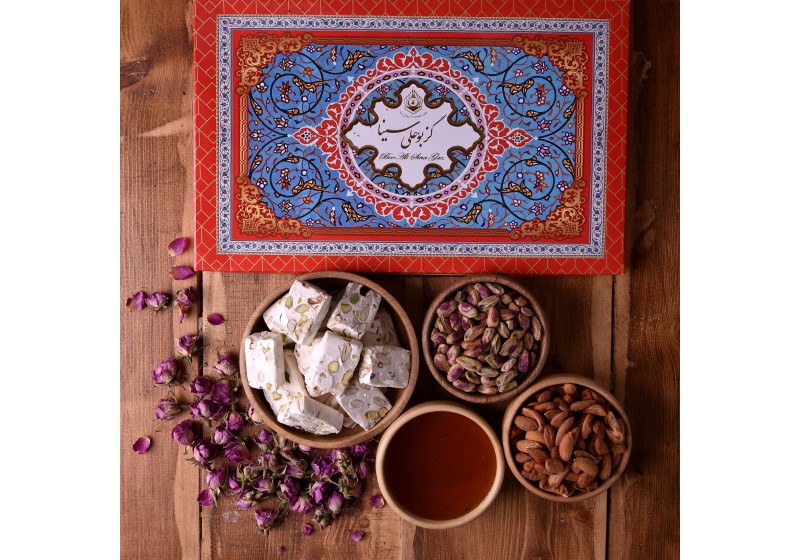
-Gaz is one of the traditional and authentic sweets of Isfahan that has a rich and deep cultural history. This sweet has been known as the main souvenir of Isfahan since the Safavid era. Below, we will examine the history and characteristics of Isfahan Gaz.
*History of Isfahan Gaz:
The history of Gaz dates back to the Safavid era. During this period, Iranian art and culture flourished in Isfahan, and Gaz was introduced as one of the symbols of this flourishing. It is said that the main root of Gaz production goes back to Halva Choubeh. Halva Choubeh was a cheap and accessible sweet that used poppy seeds and was used by farmers in the past to relieve fatigue. Over time, this sweet evolved and became the present-day form of Gaz.
*Raw materials and preparation method:
To prepare authentic Isfahani Gaz, raw materials such as sugar, egg white, almond and pistachio kernels, cardamom, rose water and gazangbin extract are used. Gazangbin is a natural substance obtained from the secretion of certain insects on plants and has many medicinal properties. In the past, gazangbin was used as the main ingredient in the preparation of Gaz, but due to the decrease in its harvest, alternative materials have been used in recent years.
*Cultural and economic position of Gaz:
Gaz is not only known as a popular dessert in Iran, but also as a spiritual asset and part of the identity of Isfahan. This traditional dessert has been preserved from generation to generation and has become a part of the life of the people of Isfahan.
During the Qajar era, Isfahan Gaz was exported to various countries and was known as one of Iran’s important exports. Today, Gaz exports to various countries continue and this dessert is known as a quality Iranian product in global markets.
:References
1. Book “History, Customs and Traditional Cuisine of Semnan, Markazi, Qom and Isfahan Provinces” by Zahra Kashfi
2. Article “Gaz Soghat Isfahan” by Tasnim
3. The article “GAZ (1) i. GAZ‑ANGOBĪN” in the Encyclopedia Iranica, which deals with the plant and insect root “angbin gaz”.